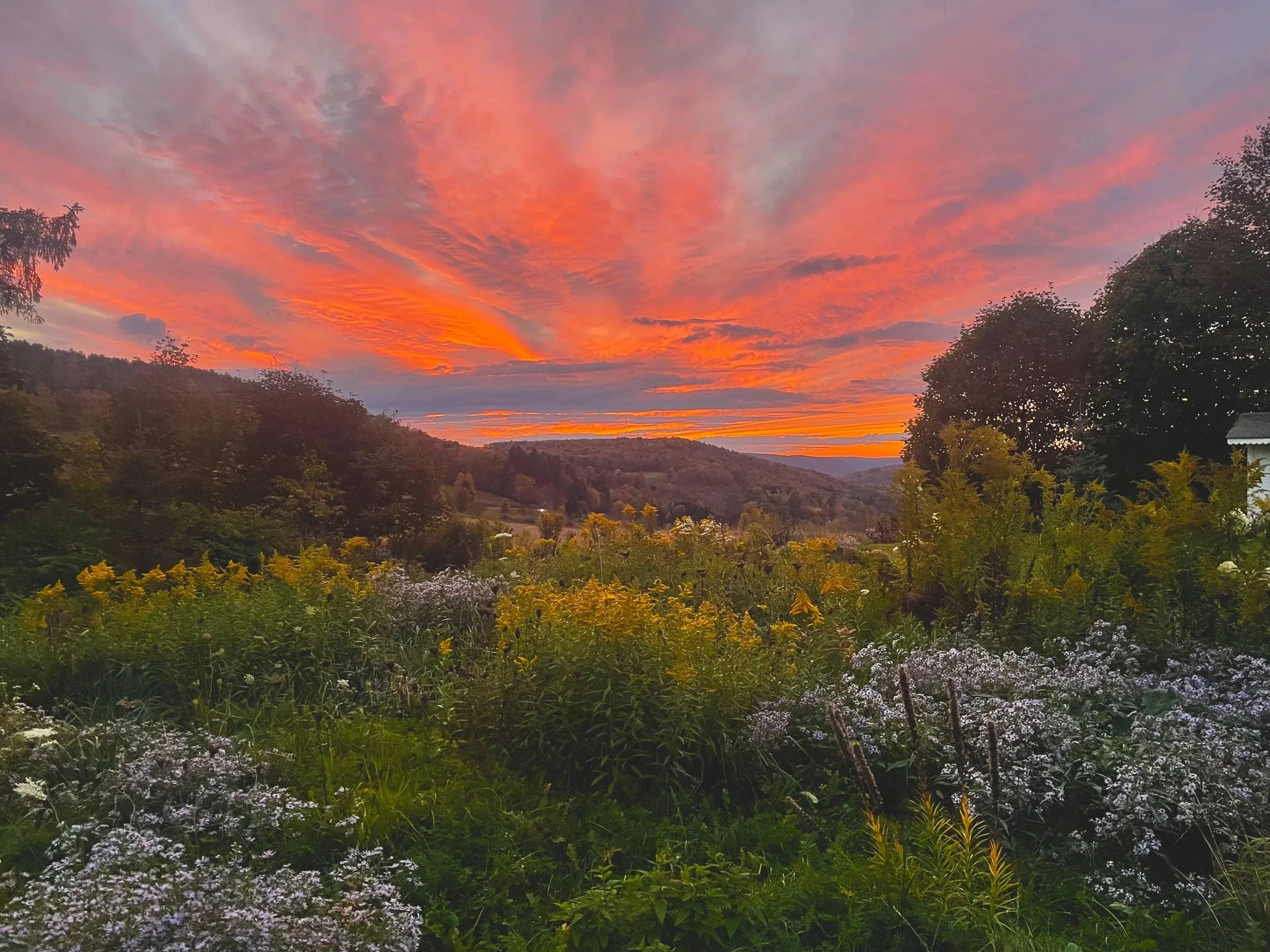
The Artists Garden Studio After Thomas Cole: a four-year, four-season study of regenerative land use, tracing the conversion of grazing land into a pigment farm in the western Catskills of New York State
Reconsidering Value, Sustainability, and the Artist-Nature Relationship
The role of materials in ecological art transforms natural and sustainable elements into active participants that shape meaning, process, and environmental connection within artists garden studios.
The Garden Studio is a research-driven initiative that examines the cultivation and processing of pigments and dyes derived from local, natural sources through a regenerative, place-responsive methodology. The project situates contemporary artistic practice within the historical continuum of plant-based color production, engaging vernacular knowledge systems alongside current ecological and material concerns.
Positioned at the intersection of art, ecology, and material research, the studio re-engages traditional dyeing and pigment processes as a means of exploring alternatives to extractive models of production. It advances a regenerative approach that operates within ecological limits and responds to the seasonal, climatic, and site-specific conditions that shape material availability.
The use of locally sourced, nature-based materials functions as both method and framework. Informed in part by new materialist perspectives (Jane Bennett), the work attends to the vitality of matter and the relationships between materials, environments, and human activity. Artistic practice becomes a mode of inquiry into material processes, environmental awareness, and the interconnectedness of cultural and ecological systems.
Material variability, shaped by seasonality, ephemerality, and ecological fluctuation is understood as a productive condition within the work. This approach resonates with Tim Ingold’s notion of making as a process of correspondence with materials and environments, encouraging adaptive methodologies and sustained attention to place.
Central to the project is the articulation of a gentle art practice, framed as an ethic of care, attentiveness, and restraint. This approach emphasizes long-term engagement with ecological systems and thoughtful use of resources.
By integrating historical knowledge, local ecology, and contemporary art practices, the Artist’s Garden Studio offers a flexible and adaptable model for environmentally engaged artmaking. It positions art as a site for exploring more responsive and responsible relationships between culture and the natural world.
Historical grounding: Reconnects contemporary practice with regional traditions of plant-based pigments and dyes.
Regenerative methodology: Prioritizes non-extractive, ecologically responsive processes rooted in local environments.
Place-responsive practice: Adapts to seasonal, climatic, and site-specific conditions, making the model transferable across locations.
Material inquiry: Uses natural pigments as a framework for exploring relationships between matter, ecology, and culture.
Constraint as innovation: Treats material limitations (seasonality, variability) as drivers of experimentation and creative development.
Gentle art practice: Centers care, restraint, and reciprocity as guiding principles for making.
Environmental engagement: Positions artistic practice as a tool for fostering ecological awareness and responsible resource use.
An Artists Garden Studio in Tbilisi